Table of contents
Postcard plans are getting rewritten, as travelers increasingly build days around what locals actually do, from first-light hikes to late-night street food runs, and even cities known for their order and museums are leaning into after-dark spontaneity. In Europe, where rail timetables make multi-stop trips easier, the surprise is no longer where you go, but what you do between the big sights, and which small, vivid moments end up defining the memory.
Start before dawn, see the city reset
Not everyone wants a sunrise alarm on vacation, yet the numbers suggest early starts are quietly becoming a travel staple, and not just for hikers chasing summits. Across the Alps, where mountain infrastructure is built for day-trippers, the economics are clear: Europe’s ski and mountain sector alone generates roughly €30 billion annually, according to the European Commission, and much of that value depends on visitors using lifts, trails, and transport systems that begin operating early and funnel people into towns by mid-morning. For travelers, that means a practical advantage as well as an emotional one, because getting out before the tour buses roll in changes what you can hear, smell, and photograph, and it often makes a crowded destination feel briefly personal.
Sunrise hikes can also be an antidote to overtourism, which has become more than a slogan in Europe’s biggest cities. Italy’s government, for example, introduced a €5 day-tripper fee for Venice on selected peak days in 2024, a signal that crowd management has moved from local complaint to national policy. Starting early does not solve pressure on housing or infrastructure, but it can reduce your own footprint at the hottest hours, and it spreads demand across the day, which destinations increasingly want. The trick is to choose routes designed for regular walkers rather than athletes, pack light, and plan the descent around breakfast in a neighborhood bakery, because the point is not to “conquer” a place, it is to watch it wake up, and to arrive back when the city is finally filling in.
Midday detours that locals actually keep
Are you traveling, or just collecting landmarks? Midday is where many itineraries go soft, because after a museum ticket and a famous square, you are left with a few ambiguous hours, and that is precisely when the most defining experiences tend to appear. Travelers who deliberately insert “ordinary” activities into the center of the day, a market run, a quick swim, a neighborhood lunch away from the old town, often come away feeling they understood something real, and the data on spending helps explain why this matters. In 2023, international tourism receipts worldwide reached about US$1.5 trillion, according to UN Tourism, and a large share of that money is not spent on headline attractions but on the in-between economy: groceries, cafés, transit, small workshops, and services that make a city function.
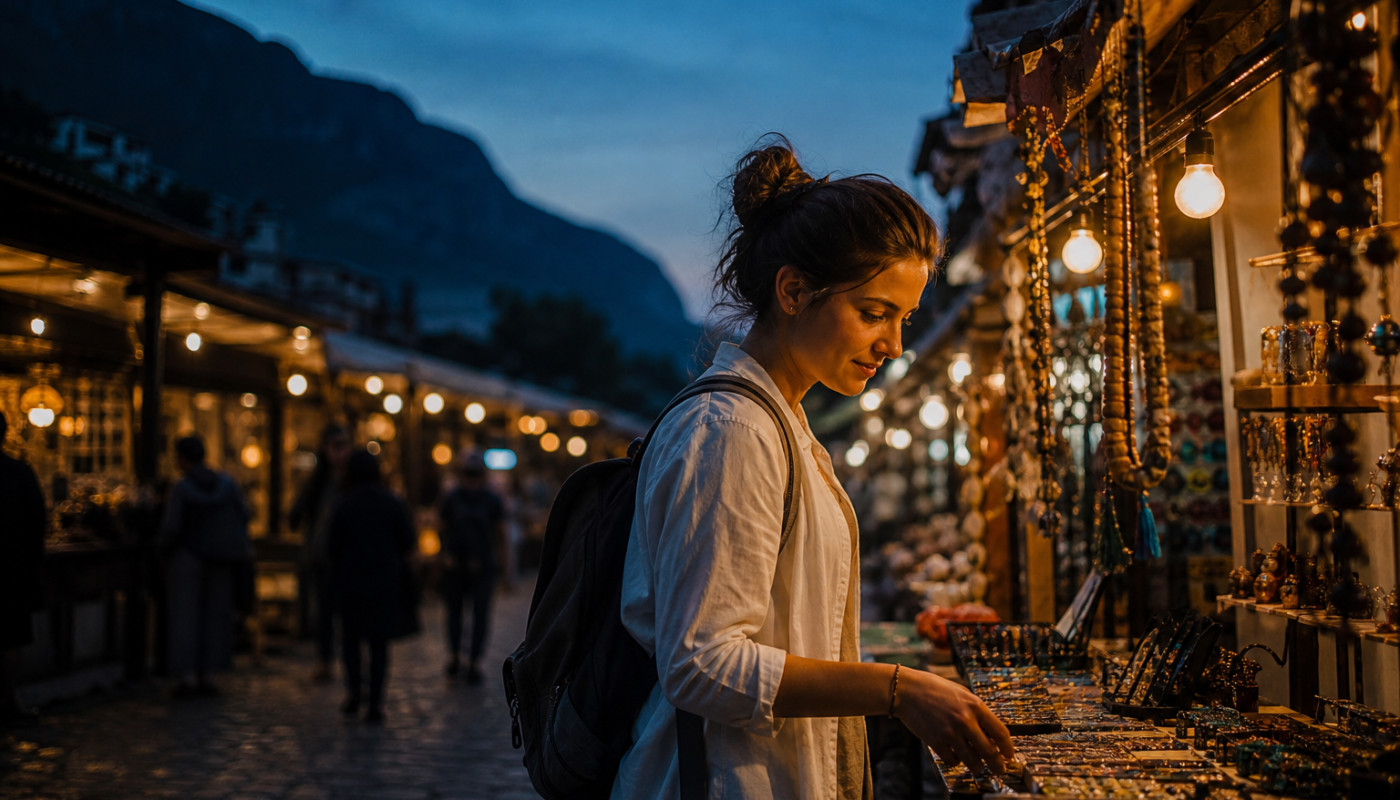
Markets are a particularly sharp lens, because they reveal price levels, seasonal habits, and what residents consider worth queuing for, and they also show how tourism is reshaping daily commerce. When visitors flood a historic center, vendors pivot toward souvenirs and convenience food, but step two or three stops out on public transport and the balance changes, because locals still do the weekly shop. In practical terms, these detours are also cost-control, as inflation has kept travel budgets tight. Eurostat data show that EU inflation cooled compared with the 2022 peak, yet food prices remain a sensitive line item for households, and travelers feel it too. A market lunch, a bakery picnic by a river, and a café that does not price itself for crowds can stretch a day’s budget without sacrificing pleasure, and it often creates the kind of story you end up telling, precisely because it was not on the postcard list.
When night falls, the city turns honest
After dark, places stop performing. That is why midnight markets, late-night street food, jazz basements, and neighborhood bars have become as travel-defining as cathedrals, and the trend is not just cultural, it is structural. Night-time economies are now treated as an urban policy issue, with city councils weighing noise, safety, transport, and business vitality, and the stakes can be large. In the UK, for instance, London’s night-time economy has been estimated in the tens of billions of pounds annually by city authorities in recent years, and European capitals have followed with night mayors or similar roles, acknowledging that what happens after 22:00 is no longer a fringe activity, it is a core layer of the visitor experience.
For travelers, the appeal is the mix of sensory density and social permission, because you can eat later, walk longer, and drift into pockets of the city you would never schedule at 11:00. The best nights, however, are not improvised chaos, they are lightly planned: check the last train, know which districts thin out after midnight, and understand local norms, whether that means cash-only stalls, quiet streets near residential blocks, or stricter rules on public drinking. Safety statistics also matter, because perceived risk can be distorted by social media, while actual risk often clusters around certain times and places. A simple discipline helps: travel in pairs when possible, keep your route legible, and treat the night like a set of neighborhoods with different moods, not as one continuous party zone, because the goal is not to chase adrenaline, it is to see the city’s unfiltered face.
Games, puzzles, and hidden streets
What if the best way to learn a city is to play it? Escape games and urban puzzle trails have moved from rainy-day backup to a mainstream travel activity, and their appeal is obvious: they turn orientation into a narrative, they make a group cooperate rather than just follow, and they push you toward streets you would never pick on Google Maps. The market has grown quickly over the past decade, and while global figures vary by source, the direction is consistent, as escape rooms expanded across Europe and North America with thousands of venues, then diversified into outdoor formats designed for sightseeing. For destinations, it is a clever redistribution tool, because it sends visitors beyond the overcrowded “must-sees” without lecturing them about overtourism.
In practice, a well-designed city game can achieve what guided tours sometimes struggle to deliver, because it forces you to look up, read façades, and notice the odd doorway or plaque that carries a century of history. It also suits modern travel patterns: shorter city breaks, mixed-age groups, and friends who want an activity that feels social without requiring specialist knowledge. If you are building a trip to Bavaria’s capital, for example, you can use https://www.munich-escape.com/ as a starting point for a puzzle-led walk that threads through central streets and lesser-known corners, and then link that experience to the rest of the day, a museum in the afternoon, a beer garden at dusk, and a late bite near a station for a clean exit back to your hotel. The point is not the timer or the score, it is the way the city becomes interactive, and suddenly you are not just passing through, you are participating.
Make the day fit your budget
Book early for sunrise slots, and check cancellation terms; popular activities sell out fast in peak season. Set a daily ceiling, then split it between transport, one paid highlight, and food. Look for city passes and regional rail deals, and scan local or national tourism sites for seasonal discounts, because small reductions add up quickly.
On the same subject
